
Hip Resurfacing
Metal on metal hip resurfacing is an operation that lost its popularity in the 2010s due to significant complications associated with metal debris generated from the bearing surface1. The metal particles that were released caused considerable damage to the soft tissues and resulted in early failures of the hip resurfacing implant which required revision (redo) operations. Due to the extensive damage to the bone and soft tissues around the hip, the functional outcome following revision for a failed metal on metal hip resurfacing was often poor.
As a result, there has been a significant decline in implanted hip resurfacings from its zenith in 2012 where 10% of hip replacements were resurfacings to current day where 0.1% of hip replacements are hip resurfacings2. This decline in its use is not just to do with the metal on metal complications but also a result of conventional hip replacements having improved both in terms of biomaterials and surgical techniques.
However, hip resurfacings have inherent advantages in certain patients over conventional hip replacements – in particular younger and more active patients as Andy Murray is testament to3.
The next generation of hip resurfacings that I use avoids the use of metal bearing surfaces as they are ceramic bearing therefore patients are not exposed to the risks associated with metal wear but still experience the benefits of a hip resurfacing.

The Benefits of Hip Resurfacing
- Reduced risk of dislocation - As the femoral head is resurfaced (not replaced) it is the same diameter as the natural femoral head and as such much larger than a conventional hip replacement femoral head. This makes the joint more stable and allows for more vigorous sporting activities that involve repetitive impact loading.
- Restoration of normal biomechanics – With a resurfacing procedure the biomechanics of the hip joint are not altered and therefore patients tend to have better restoration of biomechanical function.
- Revisions are easier – Over time hip resurfacings like hip replacements can wear out particularly in young active patients who have used their replacement to the fullest degree. Revising a hip resurfacing when it has worn out tends to be an easier revision than revising a total hip replacement.
The ReCerf ceramic resurfacing implant received its CE mark for European use in Summer 2025 and the two year clinical results have been published.
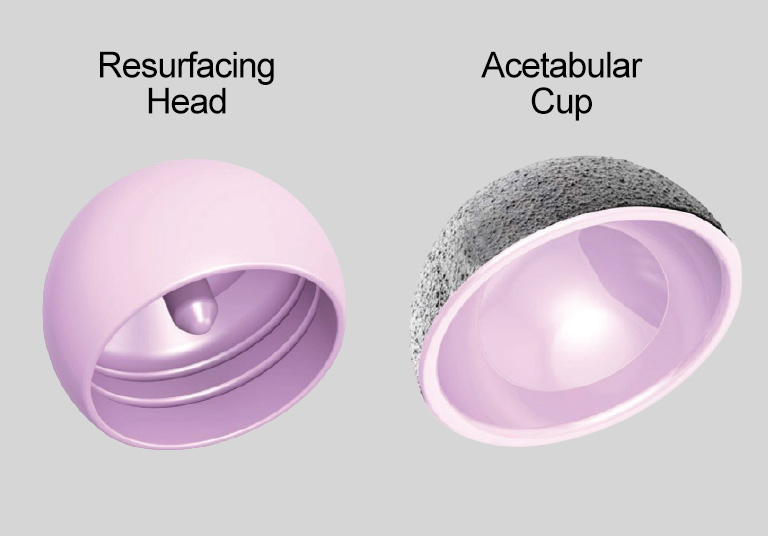
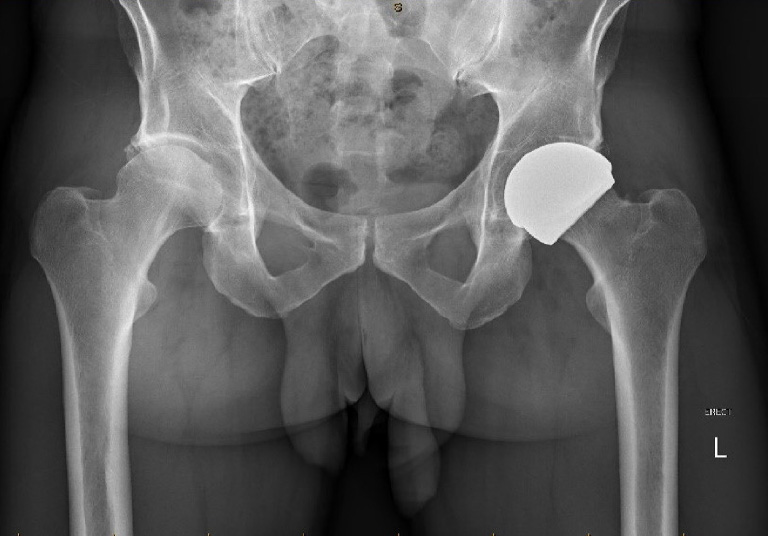
Bringing back hip resurfacing without the associated risks that metal on metal bearing surfaces expose patients to is exciting. If you would like to discuss whether ceramic hip resurfacing could be an appropriate operation for you, please contact Ben Spiegelberg 0208 736 4614.
- Pseudotumours associated with metal-on-metal hip resurfacings. H Pandit1, S Glyn-Jones, P McLardy-Smith, R Gundle, D Whitwell, C L M Gibbons, S Ostlere, N Athanasou, H S Gill, D W Murray. JBJS[Br]. 2008 Jul;90(7):847-51. PMID: 18591590
- National Joint Registry (NJR) - 22nd Annual Report 2025 - The National Joint Registry
- Andy Murray: What did his surgery entail, and what is his long-term outlook? - BBC Sport
- Two-Year Results of Ceramic-on-Ceramic Hip Resurfacing in an International Multicenter Cohort. D Lin, J Xu, P Weinrauch, D Young, K DeSmet, A Manktelow, P Beaulé, W Walter. The Journal of Arthroplasty. Vol 39, Issue 11, Nov 2024, 2800-2806